
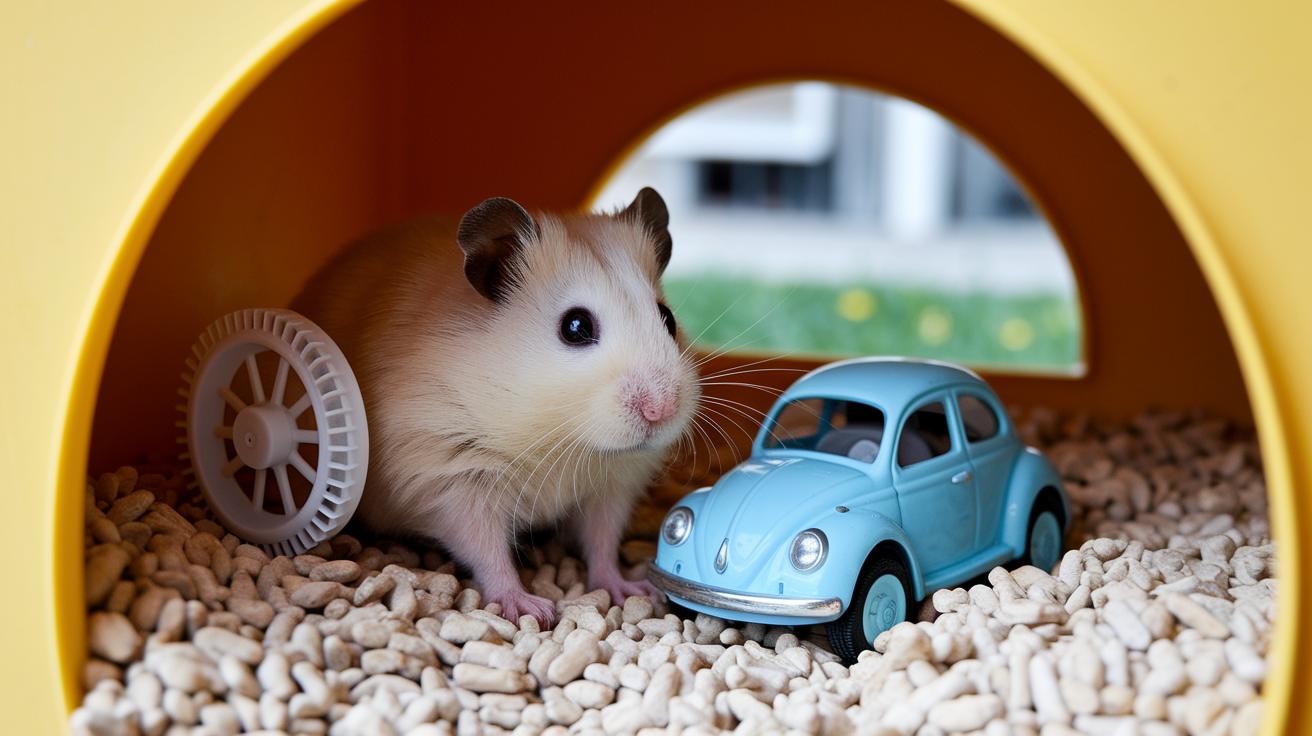

Have you ever wondered if your pet hamster’s wheel is truly the right fit? Many pet owners are taken aback by how much of a difference a properly sized wheel can make. Studies indicate that choosing a wheel between 28 and 30 centimeters can help avoid spinal issues and promote a natural running motion. In this article, we present three clever wheel size ideas that not only bring joy but also enhance your pet's overall health. Think of it as giving your little friend a cozy, safe space to run every night, setting them up for a long and lively life.
Optimal Wheel Diameter for Syrian Hamsters
When selecting a wheel for your Syrian hamster, choosing the proper size is essential to maintaining a natural running form and supporting overall health. Research shows that wheels between 28 and 30 centimeters are ideal for preventing spinal issues and back injuries. Considering that Syrian hamsters often run about 8.3 kilometers every night, having a wheel that fits their vigorous exercise routine is very important.
Wheels smaller than 20 centimeters tend to force a hunched posture, increasing the risk of chronic musculoskeletal problems. For example, imagine a hamster that runs over 8 kilometers each night but struggles because the wheel is too confined. This example underscores how an undersized wheel can lead to serious health problems over time.
It is also crucial to allow for a clearance of one to two centimeters between the hamster's back and the wheel edge. This safe distance helps the hamster run freely without putting strain on its spine. Experts in pet care and animal welfare both recommend wheels in the 28 to 30 centimeter range as the best option for optimal exercise.
By following these guidelines, pet owners can create a safe and effective exercise environment that helps Syrian hamsters lead healthier, more active lives while avoiding long-term injuries caused by insufficient wheel space.
Health Risks of Inadequate Wheel Size for Syrian Hamsters

Wheels that are too small force Syrian hamsters to adopt a curved posture, which may result in long-term back issues and even lasting changes in spinal alignment. When a hamster is confined to a wheel that does not accommodate its natural gait, its running form is disrupted and its muscles and bones bear unnecessary strain. Picture your pet having to race within a narrow loop, its back curving awkwardly with every step. This situation clearly shows why choosing the right wheel size is so important.
Wheels made with barred or meshed designs only worsen the situation. Studies have found that hamsters using metal-bar wheels are far more likely to suffer injuries to their paws. In one investigation, nearly every hamster developed wounds on its paws. These injuries not only cause discomfort but also deter the animal from exercising, which can adversely affect its overall health.
Selecting a solid-track wheel is essential to provide the proper running environment that supports a hamster's well-being. Solid surfaces lower the risk of developing painful conditions like bumblefoot, which is caused by continual pressure on the paws. Following established safety standards for pet wheels helps ensure that each run is both safe and natural.
How to Measure and Select the Right Wheel Size for Your Syrian Hamster
Begin by measuring the wheel's inner diameter in centimeters. Aim for a wheel that measures between 28 and 30 cm. For example, use a measuring tape along the inner curve and confirm that it reaches at least 28 cm.
Next, convert this measurement to inches, targeting a range of 11 to 12 inches. If the wheel measures 30 cm, this conversion results in roughly 11.8 inches, ensuring the wheel meets both metric and inch standards.
Make sure there is a gap of 1 to 2 cm between the edge of the wheel and your hamster's back. Picture sliding your finger behind the pet as it runs to understand how this small space safeguards against any unsafe movement.
Check that the solid running surface of the wheel is a minimum of 2 cm wide. This is similar to confirming that a treadmill provides enough space for comfortable and safe exercise.
Finally, verify that the wheel's overall diameter is compatible with your cage dimensions, keeping in mind elements like the cage door and the height. This ensures the wheel fits well without any awkward adjustments for placement.
Comparing Popular Wheel Size Options for Syrian Hamsters
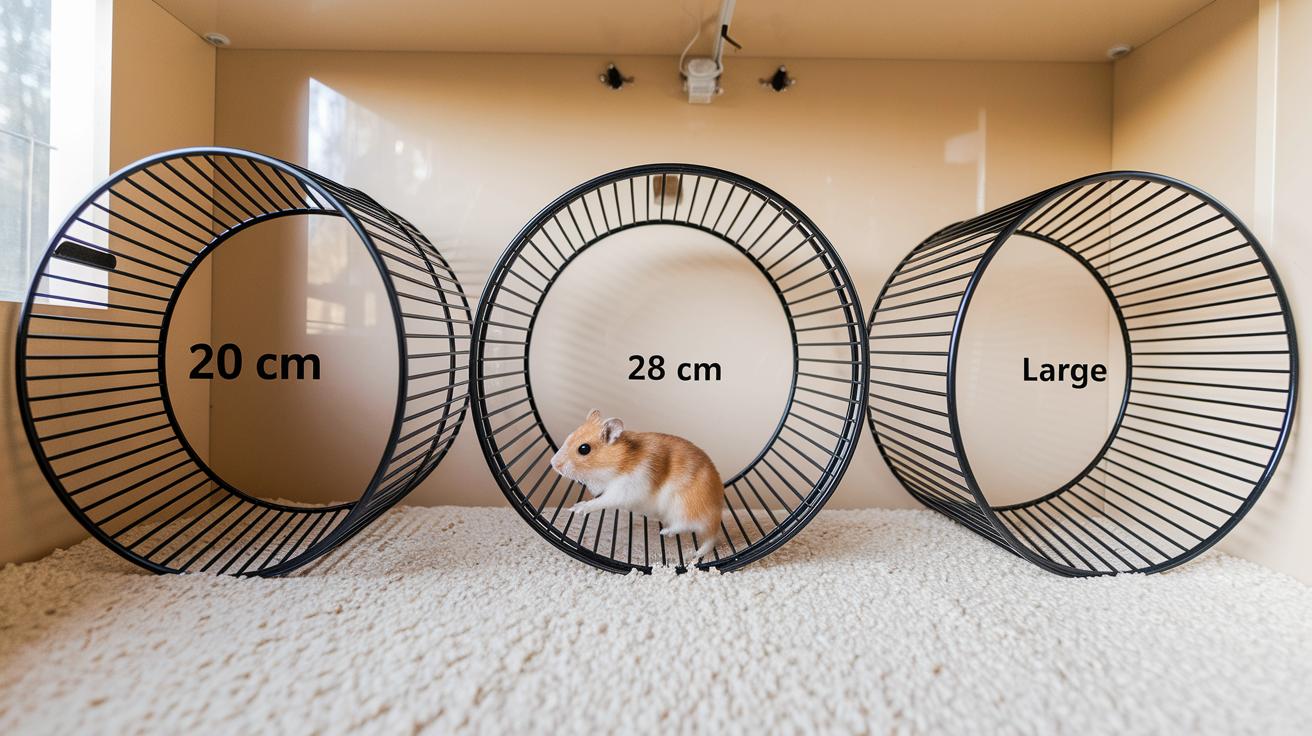
Choosing the right wheel for your Syrian hamster is crucial for its safety, comfort, and exercise needs. This guide provides a clear comparison of three common wheel sizes, outlining their price ranges, advantages, and potential drawbacks. The information below helps you decide if a wheel meets the recommended dimensions to support your pet's natural running style.
A 20 cm wheel may seem appealing because of its low cost, but it does not give enough clearance for your hamster's back, which could lead to long-term spinal issues. The 28 cm wheel is a popular choice that balances affordability and proper fit, offering the necessary space for a natural posture and typically falling within a price range of $15 to $20. Meanwhile, a 30 cm wheel, although generally a bit more expensive at $18 to $25, provides excellent support for spinal alignment and meets established safety guidelines, albeit with the need for additional cage space.
| Wheel Diameter | Price Range | Pros | Cons |
|---|---|---|---|
| 20 cm | Budget-friendly | Low cost | Insufficient clearance for a natural running form |
| 28 cm | $15 to $20 | Provides proper clearance and supports natural posture | May not be as durable as larger options |
| 30 cm | $18 to $25 | Optimizes spinal alignment and meets safety standards | Higher cost and requires more cage space |
When evaluating these choices, make your decision with your hamster's health in mind and ensure that the wheel complies with safety standards. Spending a bit more on a larger wheel can be a smart investment in your pet's overall fitness and well-being.
Safety Regulations and Best Practices for Syrian Hamster Wheel Sizing
Current animal care guidelines require that a Syrian hamster's habitat includes a wheel with an inner diameter of at least 30 centimeters. This size promotes proper exercise and allows the hamster to run with a natural posture. To meet safety standards, select wheels made from solid plastic or smooth MDF because these materials help protect a hamster's paws from injuries that can occur with wheels featuring bars or mesh, which do not comply with recommended guidelines.
Always review the manufacturer's specifications before purchasing a wheel. For instance, check that the inner diameter is 30 centimeters or more to avoid any potential risk to your hamster's spinal health. Using these dimension guidelines ensures the wheel meets legal safety requirements while providing a sturdy option for vigorous nightly exercise.
- Always double-check that the wheel meets recognized safety standards.
- Steer clear of wheels that incorporate any mesh or bar designs.
Following these best practices helps ensure that you not only comply with legal requirements but also create a safe and healthy environment for your pet.
Final Words
In the action, our post outlined why a wheel size syrian hamster should be around 28–30 cm for natural running posture.
We highlighted the risks of smaller wheels and detailed precise steps to ensure correct measurement.
We also compared various size options and reviewed essential safety practices.
By carefully selecting the recommended wheel measurement, you help maintain your pet's well-being.
Choosing the proper diameter supports active lifestyles and prevents injuries, making every run a safe, healthy adventure.
FAQ
What is the recommended wheel size for a Syrian hamster?
The recommended wheel for a Syrian hamster measures 28–30 cm (11–12 inches) in diameter. This size promotes a natural running posture and helps prevent back and musculoskeletal injuries.
What is the size of a Syrian hamster, and how does it influence wheel selection?
A Syrian hamster typically measures 5 to 7 inches long, necessitating a spacious wheel. Adequate wheel size supports their natural gait and prevents long-term spinal and muscle issues.
How do measurements in centimeters compare to inches for hamster wheels?
The ideal wheel diameter of 28–30 cm translates to roughly 11–12 inches, ensuring sufficient space for healthy movement. Accurate conversion helps buyers choose wheels that meet animal welfare standards.
Do other small pets require different wheel sizes than Syrian hamsters?
While a 28–30 cm wheel is optimal for Syrian hamsters, species like golden, Chinese, or dwarf hamsters may need different sizes. Always verify species-specific requirements for safety and proper exercise.