


Ever thought about giving your pet a spa day right at home? Many pet parents feel at-home grooming can be tough at first, but with a few simple tools and steps, you can make it fun and calming for your furry friend. This guide will show you how to gently brush out tangles, set up a safe bath, and trim nails without any fuss. Soon, you'll feel confident and see your pet become even more relaxed and healthy. Ready to try a cozy home grooming routine?
Step-by-Step At-Home Pet Grooming Guide
-
First, gather every tool you need so you can groom without stopping. You will need a slicker brush, comb, dematting tool, pet nail clippers, cordless clippers, pet-safe shampoo and conditioner, towels, a non-slip rubber mat, a low-heat blow dryer, and grooming scissors.
-
Next, brush your pet all over to remove tangles, mats, and loose hair. This is really important, especially for long-haired pets, to help prevent more knots when the fur gets wet.
-
Then, set up the bath. Fill your tub or sink with warm water that reaches about your pet’s shoulder. Put a rubber mat or towel on the bottom so your pet doesn’t slip and feels safe.
-
Now, gently wet your pet with a cup or handheld shower. Use a pet-safe shampoo starting at the neck and working toward the tail. Be extra careful around the eyes, ears, and private spots, and rinse well until no bubbles remain.
-
After the bath, wrap your pet in a towel and gently pat the wet areas dry. You can also use a low-heat blow dryer held about 12 inches away to help dry faster.
-
Trim your pet’s nails about once a month or as needed. Use pet nail clippers and trim just the tip to avoid cutting the pink part inside the nail. If you feel unsure, ask a groomer or vet for help.
-
Clean your pet’s ears by dampening a cotton ball with a warm, vet-approved solution and gently wiping the outer ear. Remember, do not stick anything into the ear canal.
-
For the final touch, use clippers to tidy up any stray fur. Follow the natural direction of the coat for a neat look.
-
When you’re finished, pick up loose hair and wipe down your grooming area. Regular sessions not only keep your pet’s skin and coat healthy but also help your pet feel comfortable and build trust between you both.
Step 1: Gather Your Grooming Tools

We all know that having the right tools makes grooming time easier and safer for both you and your pet. This simple guide lists the tools you need along with a few handy tips for each one:
- Slicker brush for detangling and removing loose hair. It glides through your pet's coat like a gentle breeze, easing knots without any tugging.
- Metal comb for finishing and checking for mats. Think of it as a fine-tooth comb that smooths and refines your pet's fur.
- Dematting tool or rake, which is especially useful for pets with thick coats to gently untangle tight knots.
- Nail clippers (either guillotine or scissor style) for precise trimming. Just be careful around the quick (the sensitive part) to avoid cuts.
- Cordless clippers for an even trim. They allow you to move easily so you can trim your pet’s fur without feeling restricted.
- Gentle, pH-balanced pet shampoo and conditioner to clean your pet safely without harsh chemicals.
- Cotton balls with a vet-approved ear cleaning solution for keeping ears clean without irritation. Use a light touch for the best results.
- Towels and a non-slip rubber mat to make bath time safer by preventing slips.
- A blow dryer on a low-heat setting or microfiber towels for gentle drying, just like a soft summer breeze.
- Grooming scissors with rounded tips for careful trims around sensitive areas.
Always choose pet-rated tools. Keep them in good shape by keeping blades sharp and cleaning them after every use.
Brushing and Fur Care Techniques for At-Home Pet Grooming
Brushing your pet every day helps sweep away loose fur and dirt. It keeps mats from forming, spreads natural oils, and supports healthy skin. Plus, these little sessions can be a cozy time to bond with your pet.
Using the right tools makes grooming feel more like fun playtime. Regular brushing shows you if there are any skin issues and removes hidden debris. A good brush job leaves your pet’s coat smooth, shiny, and full of life.
- Divide the coat into sections. Start at the head and move toward the tail.
- Use a smooth brush to lift tangles, then use a wide-tooth comb to pick out small mats.
- Spray a leave-in conditioner or detangling spray to help with stubborn mats.
- For thick or double coats, use a dematting tool in short sessions so your pet stays comfy.
- End with a bristle brush, moving in downward strokes to spread natural oils and smooth the coat.
For the best routine, set a schedule based on your pet’s coat:
- Short-haired pets: Brush once a week to keep the coat neat.
- Long or double coats: Brush daily to cut down on shedding and prevent mats.
At-Home Pet Bathing Methods and Routines
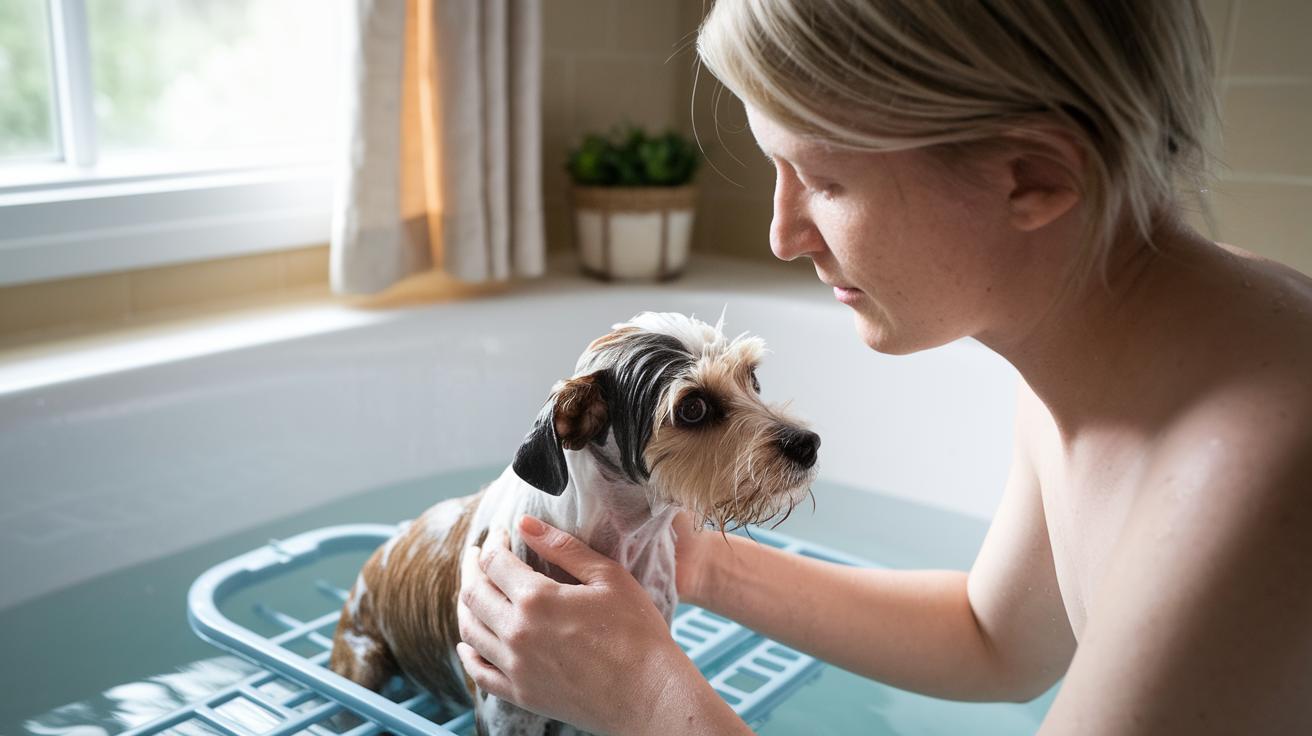
Start by filling your tub or sink with lukewarm water that reaches your pet's shoulders. Place a non-slip mat inside to keep your pet safe. Gather your supplies, pet-friendly shampoo, conditioner, and towels, in one spot so you both stay calm.
Here’s how to bathe your pet safely:
- Wet your pet’s coat thoroughly using a handheld sprayer or a cup.
- Apply pet-safe shampoo by rubbing it in small circles. Start at the neck and move toward the tail.
- Avoid getting water in the eyes and ears. Rinse gently around the head.
- Rinse off all the bubbles. Only add more shampoo if your pet is really dirty.
- If needed, use cleaning foam on paws or extra messy spots and rinse it away.
- Gently press the fur with your hands to remove extra water, then wrap your pet in a soft towel.
After the bath, you can use a low-heat dryer held at a safe distance or let your pet air-dry in a warm room. Make sure the inner ears are dry to help keep infections away.
Home Grooming: Nail, Ear, and Dental Care for Pets
Advanced Nail and Ear Care Tips
When it comes to trimming your pet's nails, start with pet nail clippers and then smooth the edges with a pet-safe nail file. This helps prevent any snagging on fabric or carpets. A little treat afterward can make your pet feel proud of how brave they were.
- Trim nails every 3 to 4 weeks.
- Only cut the tip of clear nails and then file lightly for a smooth finish.
- If you trim too far, use styptic powder right away to stop any bleeding.
For cleaning ears, wet a cotton ball with a warm ear solution approved by your vet. Gently wipe your pet's outer ear and then softly massage around the base. This light massage helps keep your pet calm and boosts blood flow.
- Stick to cleaning only the outer ear and avoid inserting anything into the ear canal.
- A gentle massage after wiping can help your pet relax.
Dedicated Dental Care Focus
Dental care is an important part of keeping your pet healthy. Brushing your pet's teeth and giving them chews helps fight plaque and keeps their breath fresh.
- Brush your pet's teeth once a week using pet toothpaste and a small toothbrush, focusing on the gum line.
- Give dental chews with ridges to gently clean teeth as your pet chews.
- Try this tip: let your pet taste a small dab of toothpaste before brushing. It can turn a routine into a fun treat time!
These simple steps help keep your pet's mouth healthy and lower the risk of dental problems.
Troubleshooting At-Home Pet Grooming Challenges

Your pet picks up on your mood more than you think. If you're feeling nervous or rushed, your pet may get uneasy. Speak softly and move slowly. This calm approach helps your pet relax during grooming.
When you hit a tough mat, try a pet-safe detangler and let it sit for about 5 minutes. Work in small sections with a dematting tool. Be gentle; pulling too hard can hurt your pet and make them more reluctant next time.
If your pet shivers or seems to fight the water, stop the session right away. Wrap them in a warm towel to soothe them. You might also want to save ear cleaning for last to keep things comfortable.
Take a break every 5 to 10 minutes and offer a small treat. Switching tasks, like moving from brushing to trimming, can keep your pet engaged and make the session less stressful for both of you.
Building a Home Pet Grooming Schedule for Ongoing Care
Having a set routine for grooming helps keep your pet comfortable and happy. It stops mats, skin issues, and overgrown nails before they start. A regular schedule even saves you money by cutting down on trips to the groomer. It also makes caring for your pet simple and builds trust between you two.
- Brush every day if your pet has a long or double coat; if the coat is short, do it weekly.
- Bathe every 4-6 weeks or when needed.
- Trim nails and check ears every 3-4 weeks.
- Brush teeth or offer a dental chew once a week.
- A professional trim every few months is optional.
Changing your routine with the seasons can make a big difference. When your pet sheds a lot, extra brushing removes loose fur and prevents tangles. In dry winter months, add a moisturizing treatment to keep skin soft and smooth. A printable tracking chart can help you stay organized, so your pet gets the care it needs all year round.
Final Words
In the action, this guide walked you through every step to ensure a smooth at-home pet grooming session. It covered essential tools, brushing tips, safe bathing techniques, nail trims, ear care, and dental routines. We also shared ideas to overcome common grooming challenges and set up a straightforward schedule. These techniques show you how to groom your pet at home in a friendly and efficient way. Keep things relaxed and enjoy quality time with your furry friend as you stick to your grooming routine.
FAQ
Frequently Asked Questions
Dog grooming for beginners at home
Grooming your pet at home for the first time means gathering your supplies, using gentle brush strokes, and following basic steps like bathing, drying, nail trimming, and ear cleaning for a safe and effective session.
How to groom your dog at home with clippers
Grooming your dog with clippers involves brushing out tangles first, then using cordless clippers along the fur’s natural grain, and finally using rounded-tip scissors to tidy up any remaining patches.
Dog grooming near me
Searching for dog grooming near you means checking local pet salons or mobile groomers if in-home care isn’t enough; many pet parents find that with the right tools, home grooming is a cost-effective option.
How to cut dog hair with scissors
Cutting dog hair with scissors means first combing out any tangles, then carefully trimming along the fur’s natural line using grooming scissors with rounded tips, ensuring your pet remains calm and comfortable.
What are the 7 steps of grooming a dog
The 7 steps of grooming a dog include brushing, bathing, drying, nail trimming, ear cleaning, clippers or scissor trimming, and finally cleaning up loose hair to maintain a healthy coat.
Why do groomers spray vinegar on dogs
Groomers spray vinegar on dogs to help neutralize odors and adjust pH levels on the skin, leaving the coat with a fresh, natural scent and reducing buildup from shampoo.
What are the 7 basic personal grooming tips
The 7 basic pet grooming tips include brushing to remove tangles, bathing with pet-safe shampoo, drying thoroughly, nail trimming, ear cleaning, dental care, and careful coat trimming using the right tools.